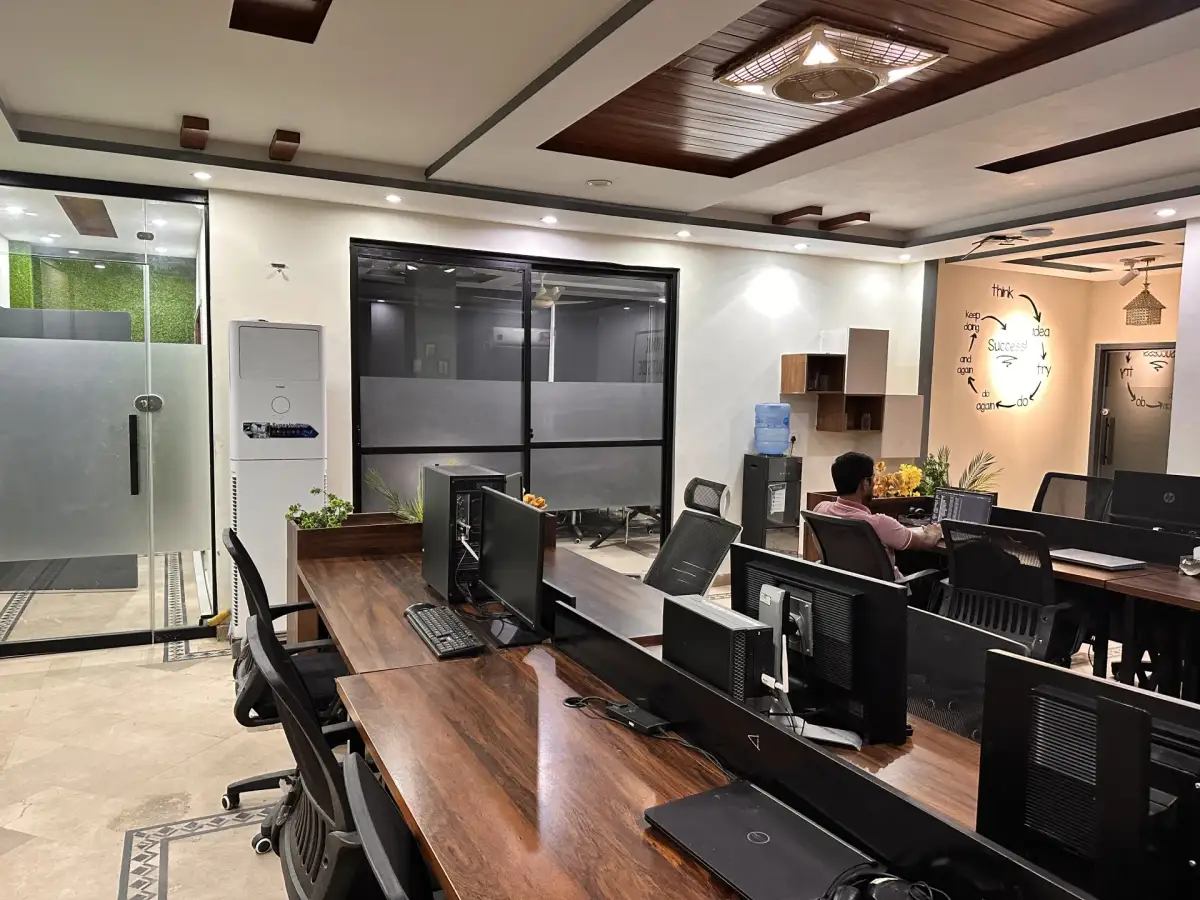
Content Marketing in Lahore's commercial market
Lahore buyers research programme fees, medical services, property status, software expertise and product details before contacting a business.
Subject experts and local customer questions provide stronger source material than volume publishing.
Publishing volume does not create authority by itself
Businesses often begin with a target such as eight blogs per month, then search for topics to fill the quota. The result is a library of interchangeable definitions with no clear relationship to products, sales objections or audience expertise. Pakistani readers quickly notice content that assumes dollars, foreign payment behaviour or US buying journeys. International buyers likewise distrust vague claims from a software house or agency that cannot show a focused point of view.
Search content can also fail through poor architecture. Several articles answer the same query, important service pages receive no internal links, and old pieces retain outdated product, tax or platform information. On ecommerce sites, generic buying guides may ignore stock, Shopify or WooCommerce collections, Daraz comparison, COD terms and payment realities. A useful programme decides whether a topic deserves a guide, category improvement, tool, video brief, email or sales document before commissioning it.
Subject expertise is another constraint that should be surfaced rather than disguised. Writers cannot responsibly invent technical, medical, financial or operational knowledge. We create a process for interviews, source collection, fact checking and named client approval. That process takes time, but it produces material a sales team can stand behind. Claims about results, market size or performance need evidence and context; attractive prose is not a substitute.
Distribution completes the work. A substantial guide should inform LinkedIn posts, Instagram carousels, email or WhatsApp follow-up, sales responses and paid remarketing where appropriate. Not every asset belongs on every channel, and repeated reposting is not distribution strategy. We plan transformations around format and audience, then evaluate discovery, engagement and downstream actions without claiming that one article alone caused every later sale.
How our Lahore content marketing programme works
Research and interviews (Weeks 1–2). We review analytics, search demand, customer questions, competitors and commercial priorities, then interview suitable client experts. Governance covers sources, prohibited claims, approvers and language requirements.
Strategy and briefs (Weeks 3–4). The journey map and initial editorial sequence are agreed. Detailed briefs define what each asset contributes, what evidence is needed and how it will link to services, products or a useful next step.
Production and approval (Weeks 5–8). Writers, editors and client experts move priority pieces through draft, fact review and publishing preparation. Complex subjects or multilingual review may need longer, and accuracy takes precedence over an arbitrary monthly quota.
Distribute, measure and refresh (Monthly from month 3). Published assets are adapted for suitable channels, monitored against their assigned role and improved as evidence accumulates. The next cycle responds to search behaviour, sales feedback and information changes.
What the Lahore team delivers
Audience and content audit. Existing pages, performance, gaps, overlap, brand voice and sales material are reviewed against priority audiences. The audit identifies what to update, combine, retire or create rather than assuming all old content needs replacement.
Topic and journey map. Questions are grouped by awareness, comparison, decision and customer stage, with a defined format and destination. Search data, frontline questions and commercial priorities inform the map.
Editorial strategy and calendar. A sequenced plan records purpose, owner, expert input, language, distribution and approval date. It balances durable resources with timely Pakistani business, seasonal or cultural subjects only where relevant.
Research-led content briefs. Briefs specify reader, intent, angle, outline, internal links, credible sources, required examples and conversion path. They explicitly flag claims requiring client evidence or subject-matter review.
Writing and editorial review. Agreed articles, guides, landing copy or case-study structures are drafted for clarity and substance, then edited for voice, factual caution and duplication. Urdu or English scope is agreed; machine translation is not passed off as local editorial work.
Search and on-page integration. Titles, headings, snippets, internal links and supporting pages align content with how people discover it. Optimisation supports readability and does not force exact phrases where they make the copy unnatural.
Distribution toolkit. Core pieces are translated into channel-appropriate post angles, email or WhatsApp prompts, sales snippets and paid-content recommendations. Actual filming, design or creator production is assigned clearly rather than assumed.
Performance and refresh plan. Reporting considers organic discovery, engaged use, assisted actions, links, sales reuse and qualitative feedback. Decaying or outdated content receives a refresh decision instead of remaining online indefinitely.